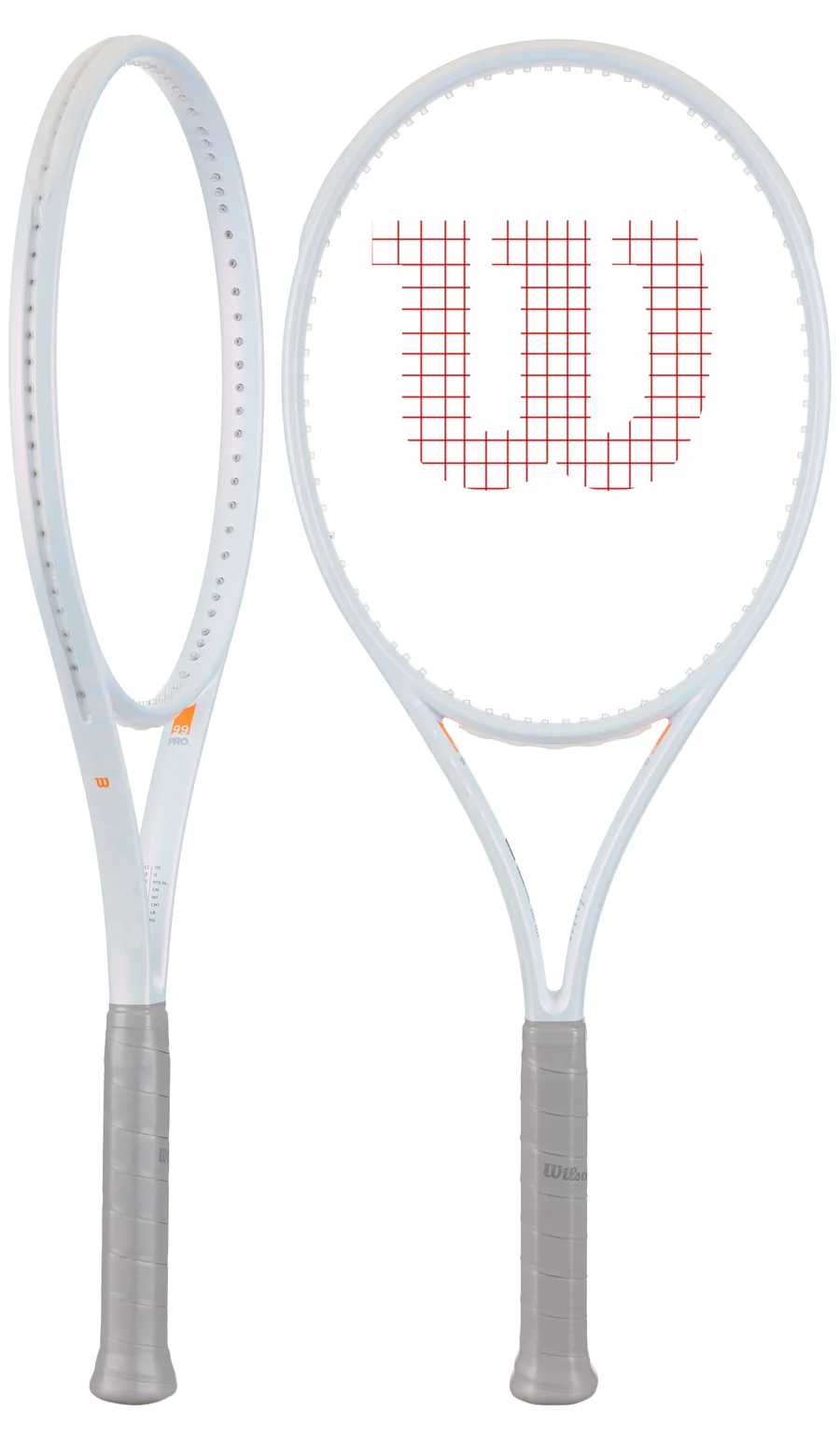
Wilson Shift 99 Pro Racket
Series: Shift
$149.00
Spin-friendly Precision. Easy Power. Great Feel
Frame specs
| Head Size | 99in² |
| String Pattern | 18x20 |
| Length | Standard |
| Strung Weight | 11.7oz / 332g |
| Balance | 12.75in / 32.39cm / 6 pts HL |
| Swingweight | 332 |
| Stiffness | 68 |
| Beam Width | 23.5mm / 23.5mm / 23.5mm |
| Composition | Graphite |
| Power Level | Low-Medium |
| Stroke Style | Medium-Full |
| Swing Speed | Medium-Fast |
| Racket Colors | White |
| Grip Type | Wilson Pro Performance |
| String Pattern Detail | 18 Mains / 20 Crosses |
| String Tension | 48-58 pounds |
Where to buy

What players say
Reviewers consistently describe the Shift 99 Pro as a stable, control-leaning 18x20 that still produces more spin and easy power than its dense string pattern suggests. The main trade-off flagged across reviews is feel: several testers call the touch on off-center hits muted or dull compared to plusher frames like the Blade, and the racquet demands real racquet-head speed to unlock its spin.
Best for
- Advanced spin-oriented baseliners
- Players wanting control with easy power
- 4.5+ NTRP or high-level competitive players
- Players upgrading from stiffer, heavier control frames
Pros
- Generates more spin than expected for an 18x20 pattern
- Strong stability and plow-through from the added mass
- Good blend of control with accessible power
- Stays maneuverable despite the heavier build
Cons
- Feel can go muted or dull on off-center or slower-paced contact
- Small, defined sweet spot punishes mishits
- Requires faster swing speed to unlock the spin potential
- Less plush/comfortable than smoother control frames like the Blade 98
Voices
— Chris, Tennis Warehouse playtest team, Web
The spin player's 18-main string racquet—spin and speed proved to be a deadly combo.
— Troy, Tennis Warehouse playtest team, Web
More spin friendly than most 18x20s.
— Michelle, Tennis Warehouse playtest team, Web
Mass combined with maneuverability allowed defensive-to-offensive transitions.
— Tennisnerd.net review, Web
Torsionally stiff for added stability and power when driving the ball, and laterally flexible for increased dwell time on vertical mechanics, think spin.
— TennisCompanion review, Web
The racquet's extra weight also improves the frame's stability, making it less likely to get pushed around when your opponent picks up the pace.
— Jason, RacquetQuest, Web
Missing the sweet spot results in a dull, non-responsive feel.